


If I didn’t know better I wouldn’t have noticed that the theater at 2220 Beverly in Westlake was under new management. Last I heard, the Bootleg had closed during the pandemic, and that area of Beverly Blvd is fairly quiet. Brooklyn Bagels faces the venue and defunct businesses dot around them in a largely residential area. There are just enough streetlights to cast disquieting shadows over the sidewalks. I can’t attest to the noise in the area, but 2220 is inconspicuous from the street.
Their main door seems to be on the side of the small stage these days, leading directly to the bar if you’re determined enough. The Bootleg was one of my favorite venues during its heyday, and my heart hurt to see how little had truly changed since they went out of business. I should see it as a positive, but I felt like I was visiting a grave. The posters around the bar and near the bathrooms were up-to-date, implying that the people at 2220 Arts + Archives kept up the tradition, but is it tradition when you’re not actually honoring the past? I’m overly nostalgic, I know.
I had no idea this show was in the back. I stood among the tables with a beer in my hand to center my focus. Many folks were similarly imbibing to pass the time, though everyone else was chatting in a stool at a table. Enough time passed that it felt like the show must be starting soon, but there was no movement onstage. A peeling wooden chair sat awkwardly distant from an upright guitar in a stand. A simple drum kit was banished to the back wall behind which no throne could fit. More minutes passed. Noises were coming from the theater but not loud or consistently enough to alarm our crowd. It should have; the realization would have been less humiliating. No, instead, a man in-the-know walked through us like a fish in a pond, creating a wake that pulled us toward the door in the back.
The truly embarrassing part though was the first part of the actual show. The theater space has a stage and bleachers and acres of no-man’s-land in between. Maral set up at the foot of the stage, leaving a chasm between us. I don’t know what we expected as spectators but we filed into those seats and never stood back up until Maral completed their set.
An apt opener for the night, Maral’s left-field noise had a way of yanking any listeners along on a bumpy journey. It was hard not to vibe under the mesmerizing film backdrop. I wasn’t the only one feeling it in my limbs though, thankfully. Brave folks in the front row would stand and wiggle for stints. We probably didn’t leave a lasting impression on Maral. When I educated myself after the show, I realized that the video was visually similar to the Iranian producer’s album cover for Patience (صبر), released only a few weeks prior. Further deduction led me to understand the backdrop’s intention as well, with southwest Asian landscapes and Muslim women, aligning again with Maral’s self-described inspiration.
“The track ‘patience’ is from 2013 & my first explorations with sampling Iranian music & harsh beats – I then transformed it into a new track called ‘patience for an old friend’ in 2020. I love reusing samples & creating new spaces for them” – Maral on Instagram
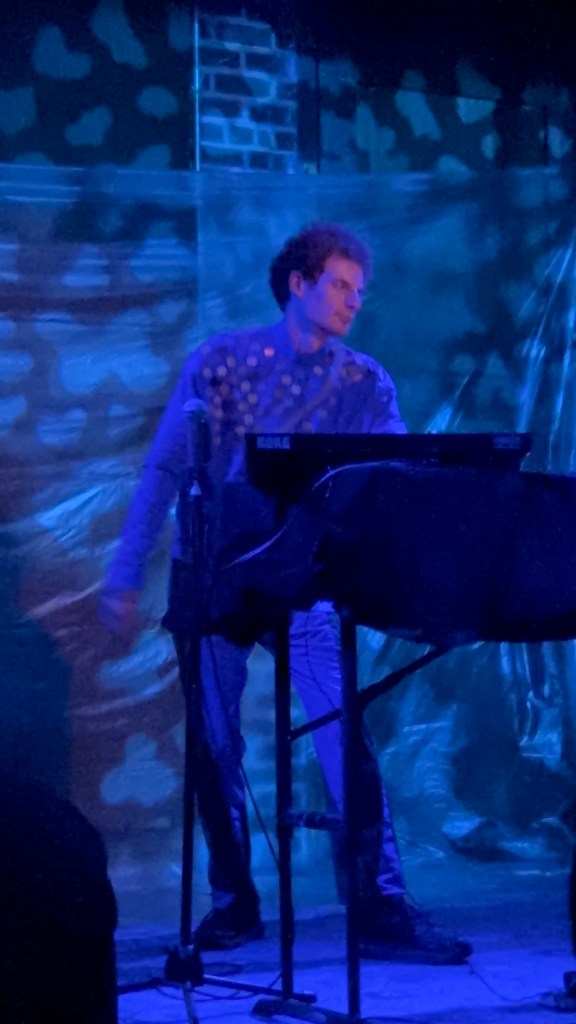
Photay has grown up. I’ve been a longtime fan of the LA-based artist, though perhaps not the most attentive. The self-titled EP made a huge mark on me right when I moved to Los Angeles myself ten years ago, and for the longest time it remained the image in my head of the artist also known as Evan Shornstein. I listened to more of his career as the years wore on but I wasn’t aware that he was aging per se, I just always thought of him with that giant head of hair. At 2220, he had matured, sporting a beard and a far more reasonable haircut. He even glimmered in the low light in a special garment (whose significance he did share during a break in his set but I shamefully do not remember).
This show was the album release celebration of Windswept, Photay’s latest full-length LP. He dropped some tidbits about the origin of the album during the show, including the importance of Randal Fisher who joined Shornstein live on the flute and saxophone for two songs. Fisher, Shornstein, and Carlos Niño recorded an improvised session together that Shornstein later chopped up and added to many of the tracks of Windswept. He wrote the album with a synthesizer patch he developed, called ‘wind,’ starting with the track “Derecho,” inspired by severe weather in April 2020 when Shornstein began the project, according to an interview he gave Roland.
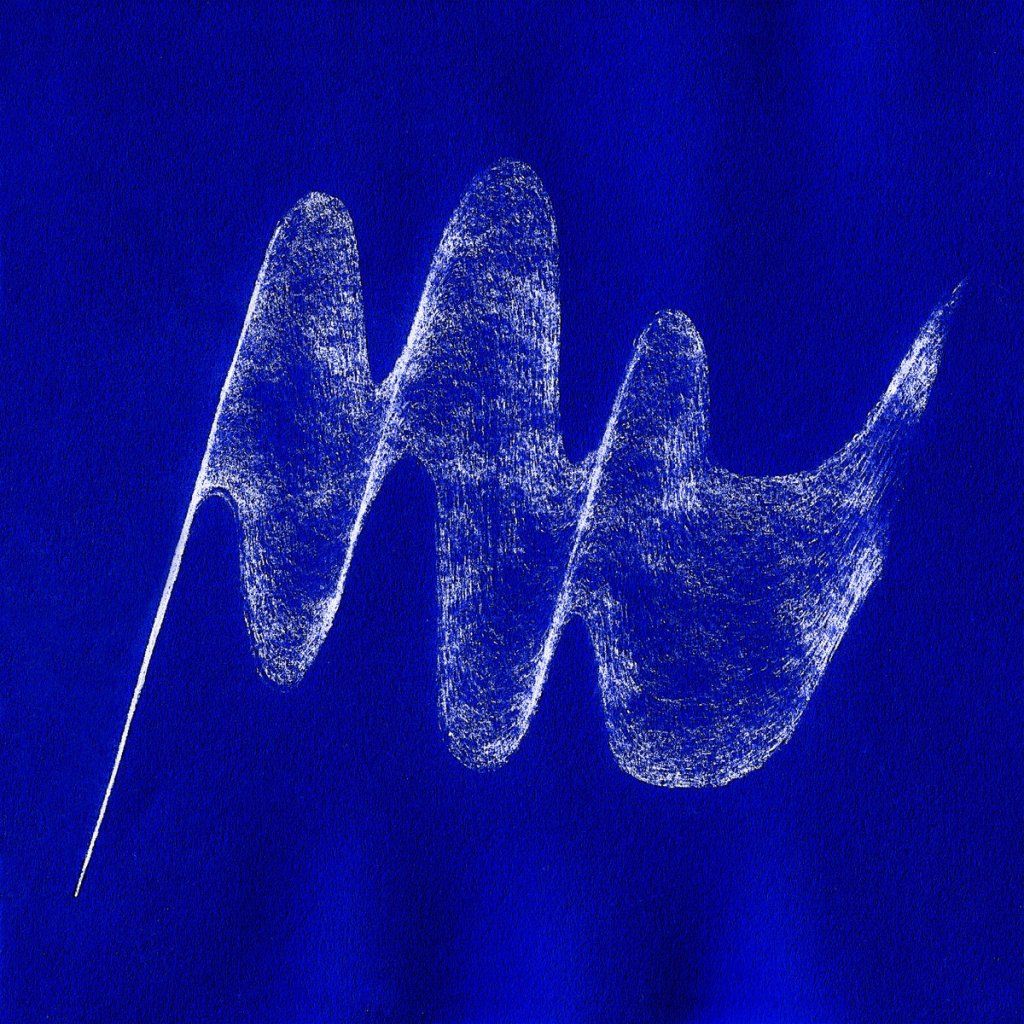
For such an intangible inspiration, I very much could feel the bass travel through the atmosphere at the show. I get to relive the experience on my turntable whenever I want; I set my levels to near-maximum bass and like to play my records loud. The layered elements never assume their stereotypical roles, where bass is verse; melodic clips are ad libs; and vocals fill in the gaps. Photay’s forte is deconstructing or reimagining the structure of an instrumental song, keeping the groove convincing while straddling the experimental.
The crowd filled in for Photay’s set and by my account were actually dancing along, without needing much fan interaction. He was set up on the stage, and we easily filled in no-man’s-land beyond the bleachers, regaining some sense of collective dignity. (Some folks still sat but I was comforted knowing that was a conscious decision.)
The performance earned an encore, which Shornstein introduced briefly by saying he wasn’t sure what the original of the next track sounds like anymore since he’s been tweaking it ever since its release ten years ago. Then he performed an invigorating re-work of “No Sass,” from the iconic EP. A fan got it all on camera in Seattle; Evan, if you’re reading this, you simply must release an official version. The growth on that song alone encapsulates the evolving genius of Photay.
Photay | buy Windswept | website | Instagram | Bandcamp | Soundcloud
Maral | buy Patience | Instagram | Bandcamp | Soundcloud
 Sawdust & Gin